
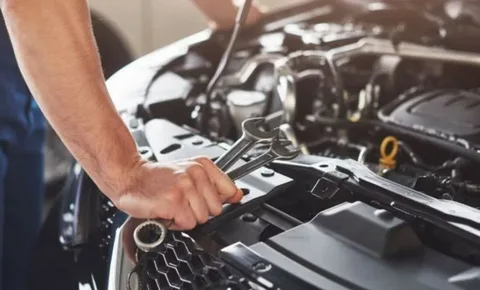
Your vehicle often gives you clues when something is not working as it should. A strange sound, warning light, unusual smell, or change in how the vehicle drives may seem minor at first, but ignoring these signs can allow a small problem to become a more expensive repair.
Some vehicle warning signs also involve important safety systems, including the brakes, steering, tires, and engine. Knowing what to watch for can help you decide when your vehicle needs professional attention.
Here are 10 warning signs you should never ignore.
1. Dashboard Warning Lights
Dashboard warning lights are among the easiest signs to overlook, especially when the vehicle still seems to drive normally.
Depending on the warning light, the issue could involve the engine, battery, brakes, airbag system, tire pressure, or another vehicle component.
A check engine light does not always mean there is an immediate emergency, but it should not be ignored. Other warnings, such as an oil pressure or brake warning light, may require more immediate attention.
If a warning light appears, check your owner’s manual and have the vehicle properly diagnosed when necessary.
2. Strange Engine Noises
Your engine should have a relatively consistent operating sound. New or unusual noises can indicate that something has changed.
Pay attention to sounds such as:
- Knocking or tapping
- Grinding
- Squealing
- Hissing
- Clicking
- Rattling
The location and timing of the noise can provide useful clues about the problem. For example, a noise that appears during acceleration may have a different cause from one that occurs when the vehicle is idling.
Instead of waiting for the noise to become louder, have it checked if it continues or suddenly appears.
3. Difficulty Starting the Vehicle
A vehicle that takes longer than usual to start may be showing an early sign of a starting or electrical problem.
Possible causes include a weak battery, failing starter, charging-system issue, fuel-system problem, or another mechanical or electrical fault.
If your vehicle repeatedly struggles to start, it is better to have the cause identified before it leaves you stranded.
4. Brakes Feel Different
Changes in braking performance should always receive attention.
You may notice that the brake pedal feels softer than usual, the vehicle takes longer to stop, or the vehicle pulls to one side when braking.
Other warning signs include:
- Squealing or grinding brakes
- Brake vibration
- A brake pedal that feels unusually low
- A brake warning light
- Reduced braking response
Because brakes are directly related to vehicle safety, unusual braking behavior should not be put off.
5. The Vehicle Pulls to One Side
If your vehicle consistently pulls left or right while driving on a reasonably level road, something may need attention.
Potential causes can include tire pressure differences, wheel alignment problems, tire wear, suspension issues, or steering components.
A vehicle that pulls to one side can be more difficult to control and may also cause uneven tire wear.
6. Steering Feels Loose or Unusual
Your steering should feel predictable and responsive. If the steering wheel suddenly feels loose, difficult to turn, or different from normal, the vehicle should be inspected.
Steering problems can involve components such as tie rods, steering linkage, power steering components, or other parts of the steering system.
Do not ignore a significant change in steering response, particularly if it occurs suddenly.
7. Unusual Vibrations
Vibrations can occur for many reasons, and when they happen can provide important information.
For example, vibrations may become noticeable:
- While braking
- During acceleration
- At higher speeds
- While turning
- While idling
Potential causes can include tire imbalance, wheel problems, brake components, suspension issues, drivetrain components, or engine problems.
A vibration that is new, worsening, or persistent should be diagnosed rather than ignored.
8. Unusual Smells
A strong or unusual smell coming from your vehicle can be another warning sign.
Different odors can have different possible causes. A burning smell could be associated with overheating components, brakes, oil, or electrical parts. A sweet smell may be associated with a coolant leak.
Fuel odors should also be taken seriously because they can indicate a fuel-system problem.
If you notice a strong or persistent unusual odor, have the vehicle inspected instead of trying to mask the smell.
9. Fluid Leaks Under the Vehicle
A small spot underneath your vehicle may be easy to dismiss, but fluid leaks can indicate a developing problem.
Different fluids have different colors and appearances, and identifying the fluid can help point toward its source. Possible leaks can involve engine oil, coolant, transmission fluid, brake fluid, or other vehicle fluids.
Do not rely only on the size of the puddle. A small leak can become larger over time and may eventually affect vehicle operation.
10. Overheating or Temperature Problems
An engine that is running hotter than normal should not be ignored.
Watch for an increasing temperature gauge, an overheating warning, steam from under the hood, or coolant leaking underneath the vehicle.
Continuing to drive an overheating vehicle can cause serious engine damage. If the vehicle begins overheating, find a safe place to stop and allow the situation to be assessed rather than continuing to drive and hoping the temperature returns to normal.
Other Changes Worth Paying Attention To
The 10 signs above are some of the most important, but drivers should also pay attention to general changes in vehicle performance.
Reduced acceleration, poor fuel economy, difficulty shifting, unusual tire wear, weak air conditioning, or a vehicle that feels different from normal can all be reasons to schedule an inspection.
You do not need to diagnose the problem yourself. Simply describing what changed, when it happens, and whether it is getting worse can give an automotive technician useful information.
Why Early Vehicle Repairs Matter
Small vehicle problems can sometimes affect other components when they are left unresolved.
For example, an alignment issue can contribute to uneven tire wear, while a cooling-system problem can eventually lead to engine overheating. Similarly, worn brake components may affect other parts of the braking system.
Early diagnosis does not guarantee that a repair will be minor, but it can help identify problems before they cause additional damage or leave you with an unexpected breakdown.
When Should You Stop Driving?
Some warning signs require more caution than others.
If you experience a major loss of braking, severe steering problems, significant overheating, heavy smoke, a strong fuel smell, or another condition that makes the vehicle unsafe to operate, do not continue driving simply to reach a repair shop.
Move to a safe location when possible and arrange appropriate assistance.
Why Choose Dream Coast Auto?
When your vehicle starts making unfamiliar sounds, handling differently, or displaying warning lights, getting the issue checked can help you understand what is happening before the problem becomes more disruptive.
Dream Coast Auto provides automotive service for drivers who need professional attention for maintenance and repair concerns. From brakes and oil changes to engine diagnostics, AC repair, transmission service, suspension and steering, battery and electrical work, cooling systems, and tires and alignment, the right inspection can help identify problems and determine the next step.
Conclusion
Your vehicle rarely changes its behavior without a reason. Warning lights, unusual noises, braking changes, steering problems, vibrations, strange smells, fluid leaks, and overheating can all indicate that your vehicle needs attention.
Paying attention to these signs and scheduling service when something feels different can help protect your vehicle’s performance and reduce the chance of an unexpected breakdown. When a warning sign involves an important safety system, it is especially important to have the vehicle inspected rather than continuing to drive without knowing the cause.